I am only one, but I am one. I cannot do everything, but I can do something. And I will not let what I cannot do interfere with what I can do.
– Edward Everett Hale
I started a new job, moved across the country, and left most everything I know to start fresh. Been on hiatus for a while, time to recollect. Let’s try again.
While digging through a stash of old corporate wellness materials, I stumbled upon a book written by Nancy Jane Smith called, “The Happier Approach.” It honestly reminds me of one of those free books you’d get at church during the Easter season, or from a self-help seminar, or in one of those little lending library kiosks you see in small towns. The cover art is very basic, and said cover art looks like it was printed in 480p. Yet, I’ve thoroughly enjoyed working my way through it (insert lesson on not judging a book by it’s cover).
One idea that Nancy works through has stuck with me – the idea that accomplishing a goal will provide a sensation of calm and quiet, that we should be overwhelmed with relief that we accomplished something. Yet, rarely is this the case. That focus moves from the task at hand, flies past the joys of completing it, and transfers into the anxiety and stress of what is next.
Her justification for this is that we are validating internal needs with external stimuli. Meaning, the internal feeling of anxiety or stress or fatigue or exhaustion isn’t magically fixed by an external factor. Its the same idea behind “I need a drink!” after a stressful day. It’s a band-aid in lieu of stitches.
We are on this constant quest for perfection. 10 things on the to-do list? If we do 9 but miss the 10th, we feel more guilt about missing it than pride in accomplishing the other 90%. We fear the ridicule from our brain for missing the one shot more than we long for the joy of bullseye’ing the others. The quest for protection protects us from the fear of failure, but it also blinds us of the little victories.
What if we don’t realize the life’s first 9 until we miss the 10th? Think of all the little victories you’ve let slide by because you missed that last task. Entire house is clean but the dishes are still soaking – failure. All of the bills, but you forgot the light bulbs you needed on your shopping trip – fail. The kiddos had perfect attendance at soccer this week, but you were 15 minutes late to that birthday party – fail.
Don’t let the idea of constantly moving the finish line further and further away cloud your view of the miles you’ve already run. Take a step back and see how far you’ve come. See the successes in simply living, breathing, being.
“How you love yourself is how you teach others to love you.”
– Rupi Kaur
I read something on Facebook the other day that hasn’t sat right with me since. It was one of those viral posts that takes off like a locomotive and is shared by many, most of which don’t take the time to really think about what they’re sharing. We see that a lot in today’s world amidst all of the politics, health scares, bizarre weather, etc. Oh, a buzzword! *shares*
The post simply read, “Depression isn’t attractive.” Then the text image went on to talk about how poor mental health isn’t attractive and that you shouldn’t be surprised when someone leaves you because of it, or if you aren’t able to find happiness because of it. How it isn’t someone else’s responsible to “fix” you, or mend your wounds. You can’t blame others for leaving you, you drove them away.
Before I delve into my personal beliefs on this, let me first say that I totally get it. I wholeheartedly understand what they’re trying to say and, quite frankly, agree with it. Poor mental health isn’t pretty. I don’t think any of us swipe through Tinder waiting to see the bio that says, “Hey, I’m Tammy, and I have depression and struggle with my self-worth. Oh, and I love the Office.” Not only do we not search for that, we don’t put that in our bio in the first place. Mental health isn’t attractive unless its the good kind – smiles, happy emojis, pictures with friends, pictures of your laughing. I totally get the point behind the post at a superficial level. There isn’t a single soul out there who sells their anxiety, depression, OCD, stress, as a Bumble topic of discussion. With that, I also want to thoroughly promote the idea that seeking help is always okay. You are never alone no matter how you feel. Even Tammy from Tinder with her multiple cat jokes and awkward picture of what appears to be her ex.
Mental health issues aren’t attractive.
Yet, they define us. I have depression. Well, I’m more inclined nowadays to say I had a mental roommate named depression who ultimately dropped out, but he still likes to visit every once in a while. Those who know me are aware than I am very transparent with my mental health and cognizant of it. Its the main reason I created this blog. I enjoy allowing myself to be open and free with my issues because I have received so many messages about how my transparency has helped others feel safe, welcome, and not alone. Do I consider the fact I have depression to be attractive? No. Do I consider it a facet of my existence, something I work to control and applaud myself for being able to overcome? Oh, most definitely. I think that is sexy as shit.
Yet, mental health issues aren’t attractive.
If someone doesn’t truly know you, could they ever love you? Think about it. How often do we hear, “I guess I really never knew him/her” or “they weren’t who I thought they were.” Even worse, we hear this so often after completed suicides – someone had struggled for years, battled their demons and lost. If you play the fake game and you pretend to be Justin and Hailey Bieber and his wife on Instagram – constantly happy, sharing selfies, love quotes, lyrics – but hide your true self, isn’t that less attractive than owning who you are and embracing your flaws? If you have to lie to a potential partner to make them like you, to think you’re loveable, aren’t you really just lying to yourself? If you can’t love yourself, how could you ever love another… yet, how could another ever truly love you if you don’t love yourself? Think, think, think.
“How you love yourself is how you teach others to love you.”
You should love yourself regardless of the so-called issues you may face. You’ve been going to see a counselor for your anxiety? Beautiful! That is such an impeccably strong thing to do, how could someone else not see that the same? You got out of bed on time this weekend and cleaned your apartment, regardless of how bad you wanted to sloth and watch Netflix? What an amazing feat of motivation and a show of such will-power. If someone doesn’t swipe right for that, you don’t want ’em anyways. I’ll be the first to admit that self-love and self-worth don’t flow like chocolate rivers in Willy’s factory most of the time, they aren’t this ever-present entity constantly cheering lingering. These are things we must work to find and quantify. It is also vital that those things are found intrinsically, or from within yourself. No one else can give you self-worth or self-love, that’s where the “self” comes in.
Mental health issues aren’t attractive, but you are.
Say it again for the people in the back.
Mental health issues aren’t attractive, but you are.
I like that better. The has a better ring to it. If you can define the beauty of another simply based on the battles they face, you aren’t worth their time to begin with. You are you, holistically. You are beautiful in every aspect even though some may be more pronounced than others. Your trials and tribulations do not lessen your worth. If anything, they heighten it. They harden you, strengthen your hide. They are the scars that define you as a person.
And like Shane Falco once said, “pain heals, chicks dig scars, and glory lasts forever.” Kudos if you get that reference.
“Do the best you can until you know better. Then when you know better, do better.”
– Maya Angelou
Our experiences shape us.
The things we encounter, learn, overcome, are the things that define us as individuals. These stepping stones are what help give us our skills, our talents, possibly even our families and careers. We experience love and it leads to a family, we experience knowledge and it leads to a career. Yet, in the most raw meaning of the word, we truly form to our experiences.
The things we fear are most often due to experience. Whether it be our own, our peers, or a stranger’s on television, we feel fear through others experiencing misfortune or anguish. We develop our own reservations in regards to specific things. We may fear the embarrassment of failure, or simply failure itself. We need to learn to turn this fear into fuel, to realize that failure is simply a hurdle on the path to success. Without failure, we never truly know how impacting a win can be.
In a more literal sense of Maya’s words, we mustn’t let ignorance outline our actions. Far too often do we hear of one’s ignorance, the lack of knowledge on a subject, yet far less often do we hear their plans to change it. Rome wasn’t built in a day, it took generations to learn how and why the civilization was one of the most powerful in the world. The experiences of those before led to stronger armies, stronger walls, and a stronger reputation.
We must use the mistakes and downfalls of those before us to improve out reality. Never before have humans had such access to the successes and failures of those before us – libraries, wikipedia, the internet as a whole. We can learn how to build a birdhouse in minutes from a YouTube video, or how to make a proper beef wellingtown through the lense of Tasty. Yet we so often fail to force ourselves to do better with what we’ve been given, what we’ve experienced.
We must remember to take our stumbles and turn them into forward momentum.
“The presence of anxiety is unavoidable, but the prison of anxiety is optional.”
– Max Lucado
One of the most important lessons I have ever learned is that you are in control of your mind, in the most basic of senses. Your body will most always be slightly out of reach (it will almost always choose basic survival over your personal wishes), your autonomous mind can be influenced by you. While your mind may be impacted by things out of your control – life events, chemical imbalances, surprise stress – your response to these things is always in your control. This response may be short lived, your choice to overcome and power through may be brushed away by the overwhelming need to simply feel sad, bad, or mad, but even then, you’re giving yourself the choice to respond in these ways.
Too often I see the joys of anxiety, depression, anger, etc., being viewed as a prison, as the defining trait to one’s existence. This doesn’t need to be the case. While these things may truly be unavoidable, this does not deem them your prison. We must work to overcome them through forced persuasion, we must find a way to make ourselves know we are worth more than the trials and tribulations thrust upon us.
Once you shift your thinking to view these things as simply adjectives, descriptors of your own-being rather than general summations, you begin to find freedom. You begin to chip away at the metaphorical bars that trap you inside. You take that first step to clean your room and do the dishes that have been piling up for days. You decide to leave your anxiety at the door and initiate conversation with your parents, your professor, your crush. You choose to leave the things you’ve deemed a prison and simply view them as unavoidable hurdles, stepping stones towards a stronger, brighter you.
“The only limit to our realization of tomorrow will be our doubts of today.”
– Franklin D. Roosevelt
Yesterday during Mass, our priest spoke on a topic that struck a chord with me – living life in past, present, or future. Now, to preface, this post and all other posts will never be religiously, racially, socioeconomically, etc., driven. During his homily, he spoke on how our society has grown to live within one of those three categories, and rarely in multiple.
It can be tough to differentiate where you, your individual being, may live.
Do you constantly stress about what is to come? Does the thought of your upcoming exams, quarterly review, anniversary, etc., make you anxious? Do your purposefully plan your life around how it will affect you 5, 10, 50 years in the future? Then you’re a forward thinker. You live in and for the future.
If you are stuck in things that were or have been, or if you are mourning, grieving, remembering, you are living for the past. This is a natural part of life, but we must remember it isn’t a permanent place to be. Do you constantly catch yourself reminiscing on what “once was,” about the friends you’ve had, family you’ve lost, or choices you’ve made? You are living in the past.
The present is the most difficult place to be, one that I struggle with daily. One of the most cliche things I’ve ever heard is that they call now the “present” because it is a gift. With the immense amounts of corniness that brings, it remains true. Living in the now is a gift we struggle to open just like the first gift we receive from a partner, or their parents. You know the feeling – everyone’s eyes on you, so excited for whatever is in the beautiful wrapped package? Another example would be the parting gift you may receive from employees before your resignation – time spent planning it, ordering it, wrapping it, all culminating in everyone’s excitement resting in your hands. Yet, even with all of their excitement, we remain nervous, knots in our stomach because all attention is on us with huge expectations. Now, replace the idea of a gift with the idea of our now, our present.
We put monstrous amounts of stress on ourselves to be perfect in the moment. To say the right things, make the right moves, feel the right way, when we could so easily step back and just enjoy the moment. To realize we are blessed to still be breathing, taking time in as it comes. To be a recipient of this beautiful gift, the present, rather than a relic stuck in the past or simply a thought floating in the future.
The hardest part is finding a way to make the 3 coexist – live in the present, learn from the past, and hope for the future. Easier said than done, but that’s what makes it fun.
“You might have to make some tactical retreats in your order to win the long war, but never quit on your strategic vision. Never quit on getting to the ultimate place where you want to go.”
– Jocko Willink
Your ego can be your best friend or your worst enemy. Your ego is what gives you the confidence to finally talk to that girl in your math class, but it can also be the thing that gets you fired from your job. Your ego is the power behind feeling good about yourself in selfies, but also the demon that can get you into a fight. We’ve seen ego ruin the careers of athletes, celebrities, public figures. Yet, it is such a necessary tool to allow ourselves to know our worth.
You have to be able to dictate your ego to know when it needs to come out to play, or when it should take a backseat. Pushing your ego to the side is a big force behind admitting a defeat, and even more-so in using that defeat to grow and learn for future attempts. No one ever wants to admit defeat, yet when we do we ultimately end up finding strength and desire through it. Some of the tastiest wins are those that began with salt in the wound of defeat.
You can’t let these defeats dictate your future success.
We can’t see obstacles and adversity as stop signs, but rather as speed-bumps. When we face a problem, we must work to solve it. This solution may take trial and error, you may fall flat on your face in pursuit of a win, but that pursuit must continue. Your ego shouldn’t become over-inflated, but you have to keep it full of enough air to stay afloat. You have to be able to use your ego to your advantage. It is a massively powerful tool, a tool that can easily build you up, but just as easily break you down.
“If your effort is low, you’re probably not thinking about the opportunity – you’re thinking about the obligation.”
– Eric Thomas
Let me preface this by saying that Eric Thomas is the man responsible for the “when you want to succeed as much as you want to breathe” speech, so if he says it – its worth discussing.
So many times in life we are presented with opportunities, but we are equally presented obligations. To me, opportunities present an avenue for personal growth, positive change, etc., where as obligations are the things we have to do to simply exist. We often relate these things to the more droning, less exciting tasks of life (think bills, grocery shopping, tasks at work, etc.).
Yet, what if we had a shift to begin seeing the obligations as opportunities?
Every single one of us would rather put our effort, time, and money into opportunities rather than obligations. It is much more gratifying to buy that new “thing” that makes us feel special, the newest phone, shoes, car, whatever your “thing” may be. We get a lot more likes on social media posting nice things than we do from posting our $0 credit card balance or the receipt for our rent money order, which seems to be one of modern society’s biggest forms of gratification. You see a lot more already successful (or faux successful) people on social media finding fame than the little guy working his way up the ladder.
Yet, what if we began to shift to a differing mindset? “But you’re supposed to do those things! You shouldn’t get credit for what you’re supposed to do!” Why not..? Who said that was a rule? I’m much more impressed by someone who sees paying their debts off in their entirety as an opportunity rather than an obligation, or seeing someone drive an older model car so they can afford their night classes, than someone who flaunts their garage full of cars or closet full of shoes.
The other benefit of seeing things as opportunities rather than obligations is that it creates more opportunities. Paying off a credit card frees up more funds for the things you enjoy. Making sure your electric bill is up to date gives you the internet and power you need to do assignments at home and further your education. Sacrificing to send your kids to a better school presents them with a greater chance of getting into a good school and receiving scholarships and financial aid, presenting more opportunities to not only you, but them when that time comes.
We need to have a tidal shift in our thinking to see the possibly boring things in life as exciting opportunities for growth.
“Growth and comfort do not coexist.”
– Ginni Rometty
This is a topic I have found myself coming back to on an almost daily basis. I can remember talking about growth so much in a recent interview that I felt I’d overdone it. Too often we find stagnancy – we do the same thing everyday, we go through the motions of what we consider easy and correct. Yet, when we throw a wrench in the machine we usually feel not only excited but fulfilled. That nervous feeling you get before an interview is something we should always long for. We all love the butterflies we get when we see our crush, yet we never think about the butterflies we feel when a big change is headed our way.
We should chase that feeling. We should chase discomfort for the sake of growth. We should constantly be looking to shed our metaphorical skin and move into a new one. Whether its something as simple as investing an extra few bucks a week into a healthier breakfast alternative (or saving a few bucks rather!), or finally ending a relationship that you feel has diminishing returns. We should always be seeking that uncomfortable feeling of change because it almost always leads to growth.
Stagnancy kills.
Those two words have been one of the biggest motivations for me over the past year. That feeling of comfort, of ease, is a killer. Working a job where you don’t feel that you’re being your best self, hanging out with friends that don’t long to see you succeed, letting your skills and ambitions fall to the wayside because its scary to push the envelope. That is stagnancy, and it will crush your hopes and dreams quicker than anything.
Change invokes an uncertainty of outcome. To counteract this, you need to have a thorough plan in place not only for yourself but for anyone else involved. You need to be certain that the pros outweigh the cons. Change is scary simply as a word itself – the outcomes of said change can be truly terrifying, the possibility of them not coming to reality or in a different manner than planned. The rewards, whether potential or confirmed, are the driving factor in most people’s decision to come head-to-head with change. You have to come prepared with a well-written road map, ready to trudge through the mud but come out clean on the other side.
“Often when you think you’re at the end of something, you’re at the beginning of something else.”
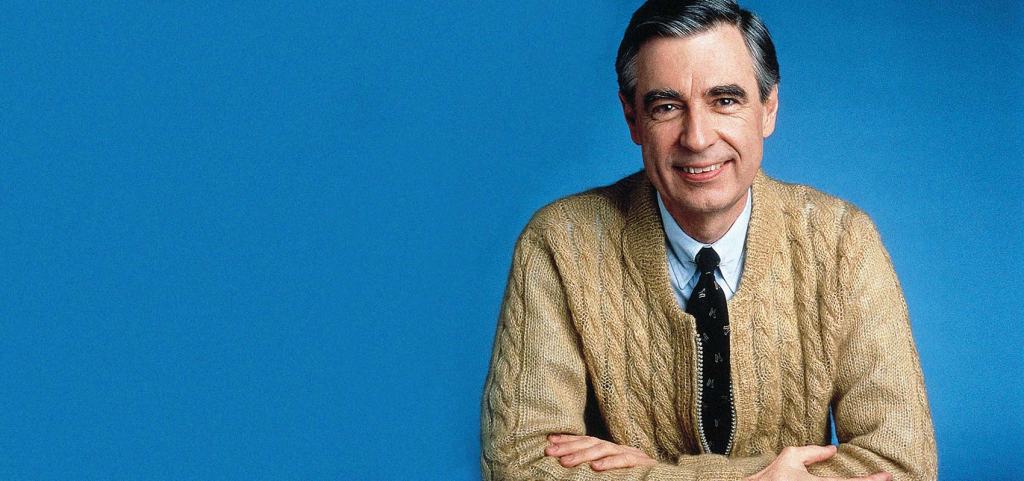
– Mr. Fred Rogers
With today being National Kindness Day, I felt it only appropriate to pay homage to one of the best humans to ever grace this Earth. One who I, and possibly you, grew up watching. Someone who helped us find our dreams, morals, and passions through his words and adventures.
We have grown to become end-seeking entities. We strive to find the end of hard times, or to finally be successful, or to stop feeling sad. We struggle to see that all of these things may be beginnings – the first step to a better life, the realization you want more, a positive change. We see life as the fight to find an end, an outcome, rather than a constant series of new beginnings. We see sadness over a break-up as the end of something we found happiness in, rather than the beginning of something possibly even better. It presents an opportunity to find ourselves, to fix things that we need to fix. We realize our major isn’t what we had hoped for an contemplate changing, seeing it as a failure rather than the ability to start again in a program where we find our happiness.
It isn’t easy to see the cup half full when you feel like said cup is cracked and you’re riding a rollercoaster, but we have to try. The easiest way to see something in a better light is quite simple – see it in a better light. Find the silver-linings, take a page from the book written by the cardigan’d wonder. Be kind to your neighbors. Say hello to a stranger. Not only are we responsible for embracing our own beginnings, we must try to help others find theirs. A simple hello may be the factor that makes someone see today as a beginning rather than an end.
See the endings as the beginning of something even better.
“To forgive is to set a prisoner free and discover the prisoner was you.”
– Lewis B. Smedes
It is a natural human function to feel distaste, anger, nausea towards those who have wronged us. When someone sets out to wrong us, whether it is purposefully or accidentally, emotionally or physically, someone you trust or a stranger – it hurts. We want nothing more than to set the record straight and burn down their house. To use our own words and actions to repay them, or to ruin their self-worth to the same extent they ruined yours. “An eye for an eye,” the law of retaliation.
When this is our course of action we bring to fruition two things.
We entrap ourselves in a locked box with no positive outcomes. We gain nothing by holding a grudge, by feeling disgust, or by living a life seeking revenge. We remain living in the past rather than working to better our future.
They win. If you let the actions of someone else impact you, they win. You imprison yourself in a constant circle of loss because you let their actions and doings dictate your self-being. If you let yourself be dictated by their actions, they win. Whether than set out to win or not, whether you even wanted to compete – they win.
So, why is it so hard to simply forgive? To move on and realize that these small moments don’t define us as people. Why do we feel such a blow when someone we love, someone we trust, or even a stranger, sets forth actions intended to negatively impact you? No one knows, its just a part of human nature. We feel hurt by the actions of others.
Yet, with this hurt comes the option to grow through it. To forgive our wrongdoings and become better through them. Your partner cheated? Forgive them, for you’re better off finding something worth your time. Your best friend pushed the humor line a little to far and your friendship has fallen because of it? Forgive them, I can promise you they feel worse about it than you do. No one ever said they were proud of you for your successes? Forgive them, as it does nothing but stagnate your own growth.
There is a difference in forgiving someone and forgetting their actions. You can forgive someone for the things they’ve done, but never allow yourself to fall into the trap of letting it happen again. Trust can be regained, but you must always look to keep yourself and your well-being first. Life is too short to be surrounded by negative entities. If forgiveness isn’t enough, move on – but try to forgive in the process.
Realize their actions may be due to their own demons. They broadcast their own issues onto you to avoid facing themselves. Develop empathy towards the ill-willed. Try to find a silverlining, as hard as it may be. The ending of a relationship can lead to the beginning of a new one, a door opened by the actions of another.
I ask you to forgive. Not for your religion, not for your friends or family, not for anyone or anything else other than yourself. Set yourself free of the burden of distaste and trauma, open your cell-door and walk free.



 Deconstructed Echos